
4 educational styles
Understanding your posture to better support your child
Parenting cannot be improvised.
We move forward with our history, our values, our experiences, and our educational models.
Without always being aware of it, each of us adopts a particular way of setting limits, listening, encouraging, and reacting.
This is what we call parenting style.
It's not about labeling or judging, but about better understanding your approach so you can adjust it if necessary.
Parenting is a journey of constant adjustment.
Becoming aware of how you support your child is the first step toward a more peaceful balance.
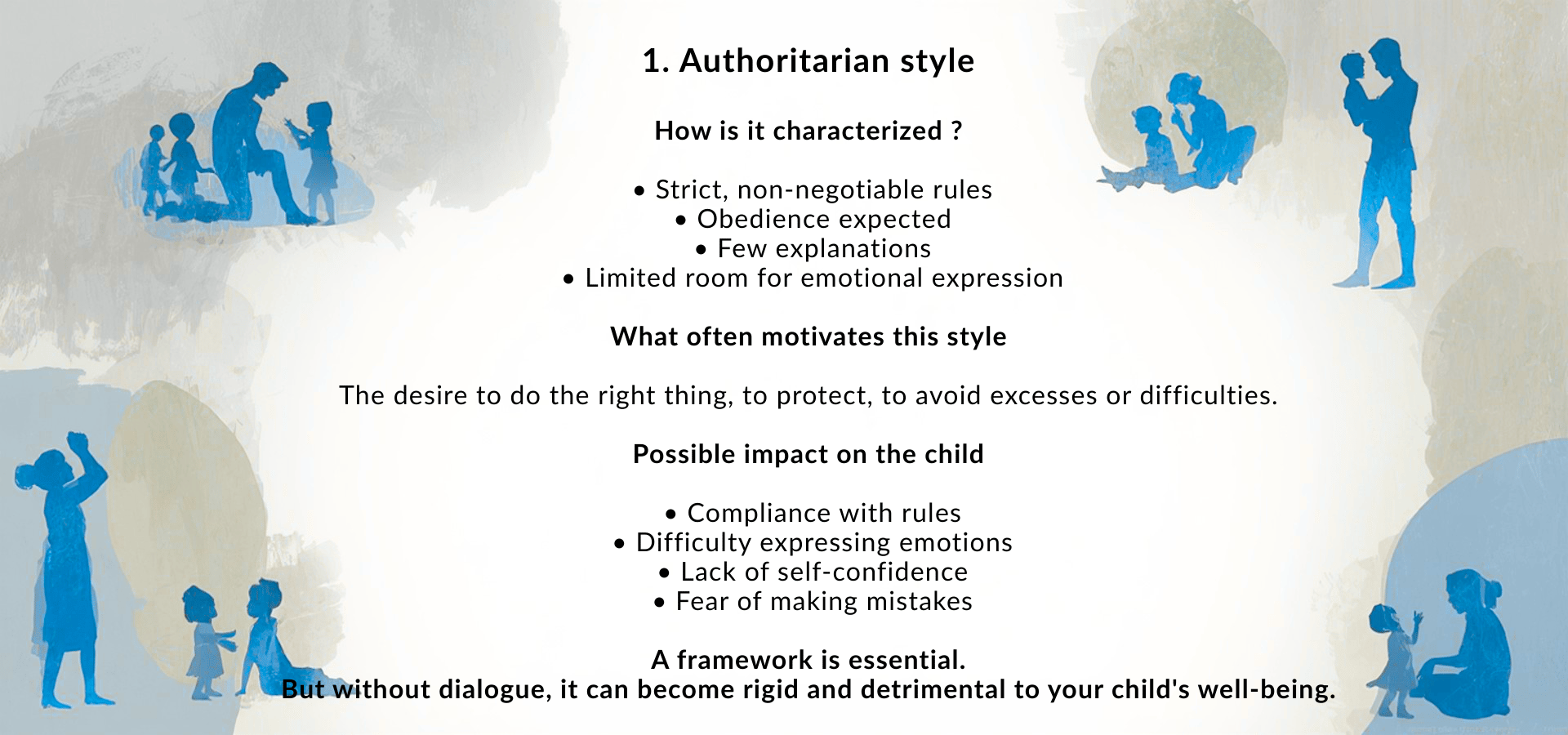
2. The permissive style
How is it characterized ?
• Few clear boundaries
• Difficulty saying no
• Strong emotional closeness
• Desire to avoid frustration
What often motivates this style
The fear of frustrating, hurting, or repeating overly strict parenting.
Possible impact on the child
• Difficulty managing frustration
• Lack of guidance
• Insecurity when faced with external boundaries
Your affection is essential for your child's emotional balance.
But it is no substitute for a structured environment.
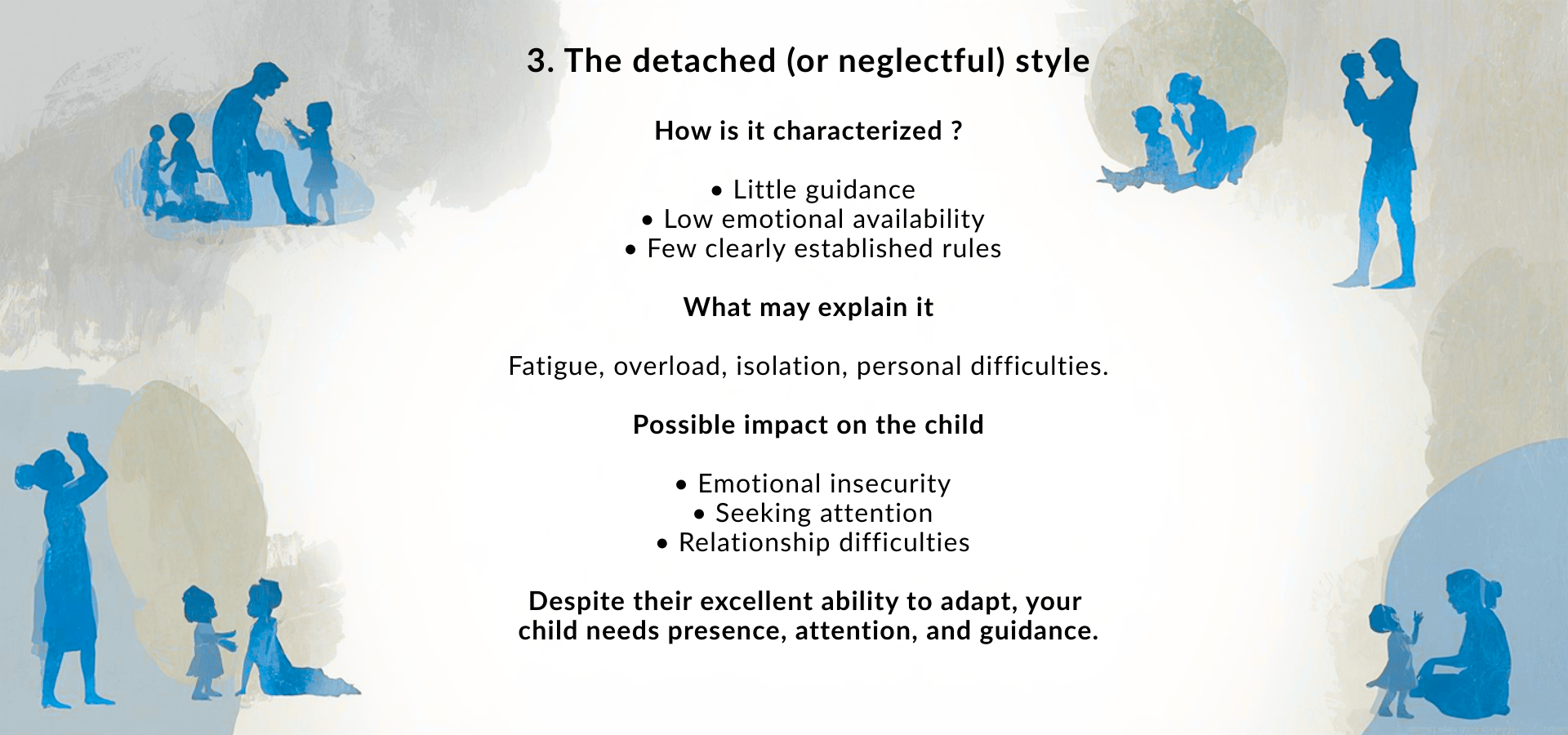
4. The democratic style (or warm authority)
How is it characterized ?
• Clear and explained rules
• Listening to emotions
• Age-appropriate dialogue
• Stable and consistent framework
Positive impact
• Development of autonomy
• Self-confidence
• Emotional security
• Ability to cooperate
This style is based on balance :
firmness in the framework, flexibility in the relationship. Your child naturally feels safe.
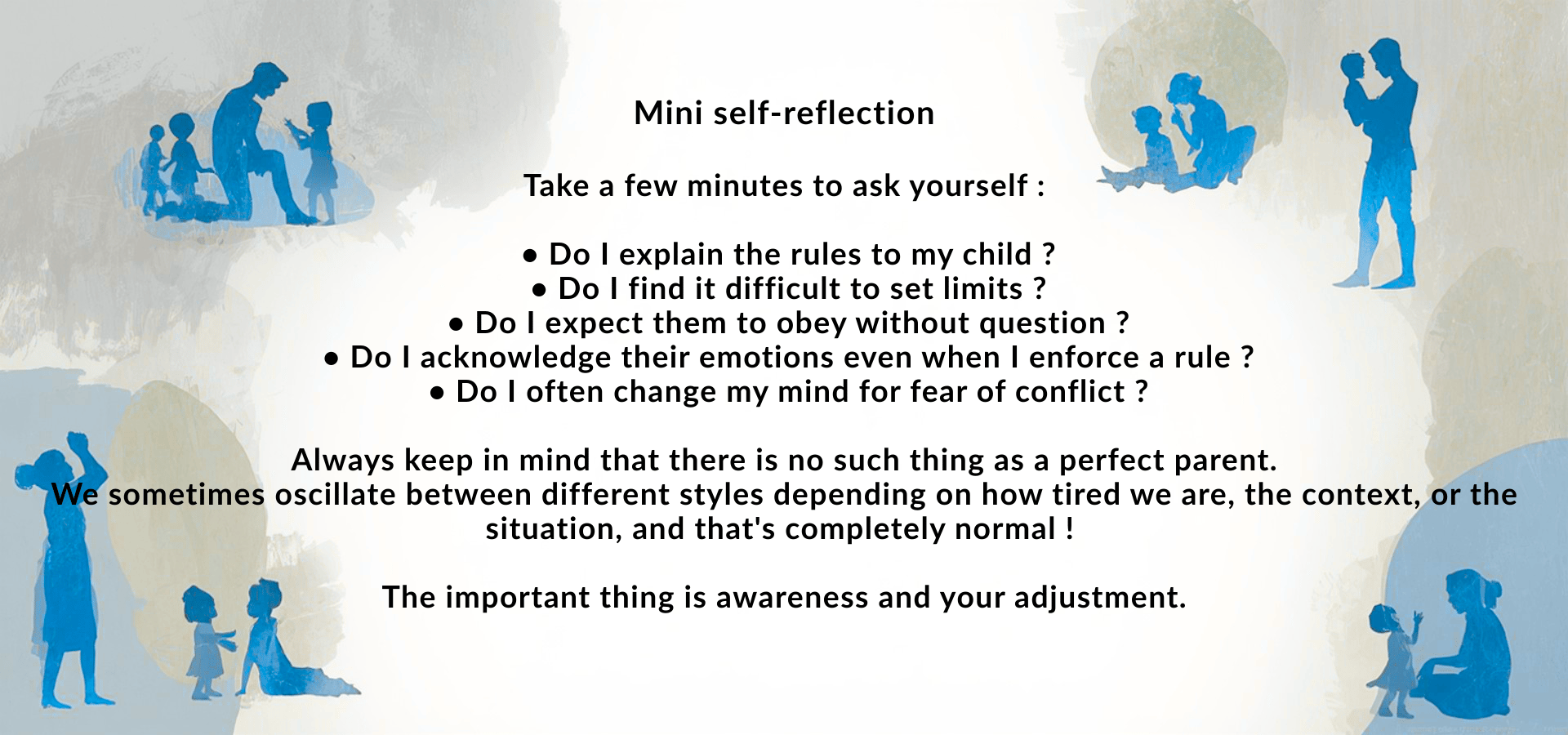
Key points to remember
No parent is stuck in one style.
Structure is necessary for development.
Emotional listening is just as essential.
The balance between the two is built gradually.
Your approach evolves with your child.
Practical tips for adjustment
• Set simple and consistent rules.
• Explain the meaning of boundaries.
• Accept emotions without compromising on boundaries.
• Be consistent in your decisions.
• Regularly question your approach.
Each adjustment nourishes your relationship with your child.
Let's stay connected


Copyright © 2025 Rayon d’Enfance.
All rights reserved.
Design and content by Rayon d’Enfance.